 |
| http://nyulocal.com/wp-content |
Showing posts with label *P.P. #5. Show all posts
Showing posts with label *P.P. #5. Show all posts
Wednesday, December 9, 2015
Will the Game change

Sunday, November 22, 2015
Black Death, I mean Friday
 |
| http://sites.psu.edu/ |
Black Friday. Arguable the biggest sale of the year, but what is it really saving you? Are you saving the $100s of dollars they save in the commercials? or is it just a ploy to get you to recklessly spend $100s, maybe $1000s of dollars? Maybe it really does save you money, but would you put those sales over your life? In 2008 at a New York Wal-Mart, a man was trampled to death as people poured into the store, no one checked on the man to see if he was ok, and on the same day in California, two people were shot at Toys ‘r Us. I mean really? Toys ‘r Us? shot over a freaking toy. Even as recent as 2013, officers had to shoot a suspect who was dragging a cop behind his truck over in Romeoville, IL. Ok, back to the subject of sales, Does Black Friday really save you money? If you think yes, then you may need to greatly reconsider. Ok fine, maybe there will be the odd deal out there where you really do get an awesome deal, but generally, you get crap for the dirt cheap prices. According to Caleb Denison on DigitalTrends.com, Black Friday isn’t worth your time. He says that usually, if you're getting electronics, you get broken electronics, or something that will break really quickly. He gave an example where he bought two Blu-ray players, from a notable brand, as gifts and within four months, he got calls from both of the recipients that they were broken or it has started having a lot of issues. He compares Black Friday shopping to gambling in vegas, “It’s like gambling in Vegas. The cards are stacked against you.”. Amanda C. Haury of Investopedia.com says that you can be easily tempted to purchase many items, so even if its a good deal, you end up paying a lot because you get a lot. Even though everything is on sale, you end up buying many items you don’t exactly need, so you waste tons of money. She mentions how many people go into a ‘shopping frenzy’ due to many people rushing and competing to get the last items on the shelf. “Black Friday has the tendency to get consumers very excited, and consumers go into a sort of shopping frenzy on the day. Overexcitement mixed with adrenaline and a credit card is not a good combination for keeping a budget intact.”, Haury talks about how over-excited people with credit cards on Black Friday is never a good thing because you may binge buy items and usually, you can’t return many of the items you get. My next post will just sum up what I’ve learned overall.
Friday, November 20, 2015
Cold War Era Boxing
Soon following the time of prosperity for the sport of boxing would come a time of hardship. From the 60s to the 80s boxing saw a gradual shift in personality, and not in a good way. Promoters and fighters brought negative connotations to the sport and would leave permanent legacies that taint the art to this day. In this brief essay, I will examine what caused the downfall of boxing and how it changed economically during this time period by using a number of articles as well as examining the tactics of fighters and their managers.
 |
| Mike Tyson |
Unfortunately for the sport of Boxing, the spectators and media began to focus more on what happened outside of the ring rather than was occurred inside of the ring in the 1960s-1980s. Muhammad Ali, or formerly Cassius Clay, served as the catalyst of this new era of the sport. His loud and rambunctious personality was something the sport had not seen before, and the media loved it. He quickly gained popularity in the boxing community for this reason. Shortly after his rise in the sport came the Vietnam War. Clay was openly against the war and even served as a political figure in an effort to dissuade the US from getting involved. He even converted to the Muslim religion and changed his name in what many critics consider to be his attempt of “dodging the draft.” Because of his rebellious actions and already thriving popularity, the media augmented his popularity with these unprecedented behaviors from a fighter. Ali grew to become a global figure of peace as he traveled the world training, fighting, and expressing his views. His renowned “Rumble in the Jungle” fight against George Foreman which took place in Zaire is a prime example. Ali transformed the sport, for good or for bad, and drew attention away from the actual fights and towards the life of the fighters outside of the sport. After Ali, Mike Tyson became a prominent figure in boxing. His arduous upbringing and tenacity towards the sport caused him to rapidly gain popularity. According to the article “1980s Boxing” by distinguished boxing journalist Scott Levinson, “the emergence of Mike Tyson was a phenomenon that hasn’t been seen since in the United States. International superstars flooded the sport, keeping boxing thriving around the globe.” Tyson was loved by the media and the people. He assisted in what caused this era to be the most profitable and economically successful time periods for the sport. Levison later went on to say that “boxing enjoyed high exposure during this time. Networks threw a lot of money into the sport and fans reaped the benefits. On any given afternoon, you could watch top boxers for free, often in high-stakes fights—many of which were absolute classics. With the proliferation of cable-TV, it was a great time to be a boxing fan. By the end of the decade, most of the big-time fights were moved to pay-per-view. The eighties were the last time where it was really easy (and cheap) to be a boxing fan.” It wasn’t long before Tyson began to spiral downhill though, which elevated his popularity even more, even if for the wrong purposes. He soon had rape charges, numerous lawsuits with promoters, and much more legal trouble that caused him to take a hiatus from the sport and which the media jumped all over. For these reasons, boxing itself was a highly popular sport, however during this time it was more related to the fighters that the sport.
The Power of Cooperation
 |
| Source: http://www.strategies.com |
What helps a person become a true leader, one that would be respected by his or her team? Nowadays we see many different kinds of leaders, ranging from strict supervisors to relaxed and “chill” business masters. However, the amount of success the person will have as a leader depends not only on the leadership style he or she chooses, but also on the amount of interaction that is formed between the leading person and the rest of the team.
As the article “4 Simple Things You Can Do To Be A Better Leader” published in Forbes website in 2014 points out, usually the most- respected leaders “have the ability to combine leading from the front and working in the trenches alongside their team.” The Forbes websites serves as a reliable source of information as it has achieved great popularity because of its current articles on vIn other words, if a person expects to become a true and respected leader, he needs to understand that working “above” everyone else won’t help at all, that is, he will have to get his hands “dirty” while trying to figure out how to lead the business successfully. Therefore, in this brief essay, I argue that in order for a person to become a well- respected leader, one needs to communicate with his or her team, listen to their own views and opinions and, most importantly, work together in order to succeed in the future and achieve as many goals as possible.
- To start with, as the article emphasizes, “leading by example involves an element of servant leadership.” In other words, one cannot be a true leader without having all of the respect coming from the members of the team who, as already known, are the main parts of the machine that run the entire company. The author incorporates the example from the Navy SEAL teams, where the philosophy of servant leadership and the need of respect is ingrained in each candidate from day one of training, especially for the officers. As the author points out, “as a SEAL you are taught to lead and be led”, you “train with your team and fight with your team.” This example shows that good leaders do not simply take their position as a “stronger” one and, on the other hand, work together, hand in hand, with the team members through any kind of obstacles they might encounter. Also, “any good leader will make a point to acquire the best possible talent they can”, the leaders’ talents will thrive only if they give their talents the necessary resources to succeed. The most important thing while being a leader, in my opinion, is to understand that if you work together with all of the team members and understand what they do every day, they will give you the proper respect you deserve. The most rewarding part of earning team’s respect is that the relationship formed on the basis of this value will go a long way for fueling company growth.
- To add, another factor that will determine the level of success one will have as a leader is the ability to learn from one’s team members. It is apparent that sometimes people who receive the leadership positions tend to become arrogant and “fueled” with pride. However, if the leader wants his or her company to move forward and make a lot of progress, he or she should never assume to know everything. This is because, as the article points out, “the minute you do, you’ve already failed.” The author of the article uses the example of Navy Seal Team once more to explain that when “fresh” officers arrive to a Seal Team, the good leaders know when to take charge and when to let the more experienced senior SEAL lead the way. This example emphasizes once again how important it is to not only lead the team, but to also listen to their experiences, as there always are things that one has never heard before and that knowledge might help him or her to finally pave the so-wanted path to successful business career.
- In addition, is it crucial for leaders to understand that they should “always learn as much as they can from others who have paved the way for them.” It is known that professional development for any leader is critical, so why not consider the talent you’ve hired and learn from them? This is quite well illustrated by new companies where weekly “knowledge sharing” sessions and constant collaboration are held across all departments. In other words, if an individual wants to lead the team, he needs to get involved and “soak up as much knowledge as he can.”
- Lastly, when leaders devote more time “working directly with their teams on various projects”, they acquire a better understanding “of what each person’s skill sets are.” In this way, good leaders will be able to identify gaps, ensure people are doing what they are supposed to do and know when there’s a need to adjust “certain systems and processes.” It is difficult to expect to be able to provide a meaningful direction to the reports if one doesn’t fully understand how the entire business machine works and looks like.
All in all, great leaders know that becoming the most important person in the entire machine means much more than just filling in a lot of papers and signing hundreds of different contracts. On the other hand, great leaders are able to realize that the progress and achievements will come only when the entire team functions properly through respect, trust and, most importantly, cooperation.
Questions that I will be trying to answer in the future research:
- What are the “outside” factors that could influence the person and make him a better leader?
- Does the country the person lives in influence the level of success he or she can have as a leader?
Does Extracurricular Matter?
 |
| http://static.zoonar.com/img/www_repository4/a2/26/e6/10_3dc31e7f7d9535bb73cc47a04aabe4be.jpg |
As a young adult close to ending his career as a high school student and about to start his career as a college student the amount of extracurricular I’ve done in the past comes to mind when it comes to applying to schools. I personally haven’t done many extracurricular but the few that I have, I’ve invested many years of my life to. I believe that to certain extents, the extracurricular that children take part in do have some sort of effect on their future academic and career success. Steven D. Levitt, a professor of economics at the University of Chicago stated that he found no correlation between the amount of extracurricular a child takes part in with academic success. While I agree with Levitt’s finding that the amount of extracurricular has no effect on the child’s future success I believe what’s important is the quality instead of the amount. It may look good on paper that a child has taken Karate lessons for one year, piano lessons for two, gymnastics for 2, and so on, but the amount of time dedicated is so minimal that it has little to no effect. I personally have spent ten years of my life playing the violin and 7 of those years playing in the Chicago Youth Symphony Orchestras. Even though it’s only one activity outside of school, the lessons I’ve learned as a musician are invaluable and would have been impossible to teach if I only played one or two years.
Starting at a Young Age
All sports are obviously dangerous, but I am going to tell you the most dangerous ones, according to healthgrade.com.
According to an article written by Sandra Gordon, Basketball is a popular sport—more than 26 million youngsters ages 12 to 17 play it—but it causes the most injuries for players of all ages. This honestly comes as a shock to me because most people do not view it as physical as football or hockey.
In the same article as mentioned above, Gordon states that, “[Football] causes the most injuries of all sports for children and teens ages 12 to 17. Play it safe: Wear all pads and other safety equipment and warm up properly before playing. Remind your child of proper tackling techniques and to limit head contact.This does not come as a surprise to me because of how much contact is involved in the sport. The quote also includes ways to prevent the injury. This can be very helpful, because from my experience as football player, coaches do not always enforce wearing all the proper types of pads which could turn into to a very serious injury.
Gordon shares that, “soccer, football, basketball and baseball, account for about 80% of all sports-related emergency department visits for children ages 5 to 14.” This shows that these contact sports need more regulation, supervision, and education. If children and their parents were given more education on prevention, I think these injuries would decrease. It may help to decrease the number of concussions in all sports. Surprisingly, hockey is the number one sport for concussions. Gordon sites that 33% of hockey injuries are concussions. Baseball and cheerleading also have a high incidence of head injuries. Protective gear and proper training can again help decrease these injuries.
The last unexpected sport where injuries are high -- volleyball. There are many injuries to joints, primarily elbows and knees. How to prevent these injuries must be drilled into parents and players -- education, education, education. This education can prevent arthritis, joint replacement, and even depression later in life. These injuries many times carry over into the adult years.
 |
| www.mamatoga.com |
Thursday, November 19, 2015
McDonald's response to flight$15
 |
| http://www.thefederalistpapers.org/us |
For years workers have pleaded for a an increase in the federal minimum wage. Their argument is that a higher minimum wage will bring millions out of poverty and provide a wage that they can live off of. Theoretically this sounds like a good plan, however the businesses that employ minimum wage workers are typically running on tight margins and in order to answer to the increase they must lower prices or let people go. Businesses are getting extremely clever to answer to the minimum wage increase and make payroll. Recently, McDonald's introduced a computerized kiosk with a brand new menu and experienced extremely successful results.
For the fast food industry, who makes profits though the narrow margins of their transactions, the spike would bring many unintended consequences. After the $15 minimum wage was pioneered by Seattle, the city is now experiencing the consequences to the change. According to "Seattle sees fallout from $15 minimum wage, as other cities follow suit" the author Dan Springer argues "many minimum wage workers are eligible for basic welfare programs and with the increase workers are now asking for fewer hours". The whole point to increase the minimum wage was to take away the peoples dependence on the government, but many workers have found that they can stay just under the poverty line and continue to receive subsidies. The minimum wage increase will increase prices and unemployment while the individuals dependence on the government stays constant.
McDonald's took their own stance on the proposed federal minimum wage increase by introducing computerized kiosks'. If a computer can do a job more efficiently for less resources then McDonald's will take the business minded approach and computerize the industry. The unskilled minimum wage protesters are now going to be making zero and will be replaced with skilled workers who will program and fix the machines.
 |
Thursday, November 12, 2015
Student Athletes Succeed in the Classroom
 |
| http://www.phillysportstc.com/ |
As a student athlete, I have never experienced a major drop in my academic success. I have learned to manage my time playing competitive tennis, completing school work, and leisure time in order to live a happy and less stressful life. For the most part, my teammates and tennis friends have received good grades in school. Competitive sports help students be more successful with school work.
Sam Snead, a professional golfer, talks about how studies show that students that play sports are more successful than students that don’t in his article “Playing Sport Leads to Improved Academic Performance.” “Research has shown that physical movement can affect the brain’s physiology by increasing cerebral capillary growth, blood flow, oxygenation, production of neurotrophins, growth of nerve cells in the hippocampus, neurotransmitter levels, development of nerve connections, density of neural network, and brain tissue volume” (Snead). Physical movement has shown positive results in the way our brain function leading to an advantage in the classroom. Competitive athletes become more engaged in class, more understanding, better at storing and retrieving information, and better with coping with stress. Active students are more likely to do better in school because of these benefits. “Participation in sport also has been associated with completing more years of education and consistently higher grades in school” (Snead). It has also been proven that student athletes go to school more and receive higher grades due to their brain benefits as well as time management skills. Overall, student athletes get many benefits from their physical activity which is apparent in the classroom. Statistics also show that they are more likely to become successful in school.
In the future I plan on researching the mental consequences of playing a competitive sport.
Saturday, November 7, 2015
Modern Society and Poaching
Clearly, poaching has
become a severe problem in many African countries. What organizations or efforts exist that attempt to stop it? As the crisis gets worse each year,
more and more steps are being taken to fight poaching. This includes the help
of countries outside of Africa. The startling number of deaths of elephants and
rhinos has influenced government leaders to push for change. According to an article from ProQuest Research Library, in the United
States, President Obama has begun to help African rangers and national parks. In
an act of assistance, the US State Department has asserted that it “will
provide $10 million in training and technical assistance to combat poaching in
Africa” (Eilperin). This money will be a big boost to the organizations that
receive it, particularly land reserves. It will help train rangers to be more
efficient at catching poachers and provide funds to purchase vehicles,
tranquilizers, cameras, and other devices. The technology purchased with the
money can help catch poachers, saving tens or possibly hundreds of animals from
being killed.
 |
| Drone with camera. Source: pbs.org |
In addition to outside support, new technology has played
a role. Recent discoveries have helped push science forward and new machines
have been built that are used in various fields. When it comes to poaching, a
popular subject of interest has become crucial: drones. The flying apparatuses
have been a huge help to rangers in Africa. With high definition cameras and
the ability to survey large areas silently, drones have given an edge in the
fight against poaching. In this article, Matthew Wall, a reporter for the BBC, learns from a
ranger that
“drones with night vision can provide a very useful extra pair of eyes." This has proven to be very true. Drones are currently
being used frequently in the field. The new technology is helping rangers
capture poachers and is particularly helpful at night, when poachers are
difficult to see and can hide among vegetation and rocks. Since their
inception, the drones have been able to save countless animals from slaughter
and are becoming used more frequently by many African countries with poaching
problems. In 2015, it is significantly easier to fight poaching than it has been in the past.
Thursday, November 5, 2015
Blog 5 - RSI Index
 |
| cns.bn.edu |
100-100/(1+RS)
RS = Number of Days it closes positively and negatively
The RSI index is out of 100 total points and the more points a company has, the more overbought the company's stock is. Stocks with a lower RSI value have a stronger potential to become profitable. Traders should be aware that large increases or decreases in a company's stock will severely affect the company's RSI value and it won't be as accurate.
Based on my experience with using equations to determine stock prices, I don't trust the calculations as much as when I watch the company's individual price over a certain period of time. I like to do my research by looking at what days, months, hours a company's stock is the highest. I also like to read about a company's current events and quarterly reports; but besides that I would never personally trust an equation to do my own research.
The History and Evolution of Sculpting
My favorite thing to do while exploring new cities is find different sculptures or statues adorning the sidewalks for the public to enjoy. Looking at these creative pieces of art, I always think to myself, who came up with the brilliant idea to sculpt large pieces of rock into beautiful pieces of rock and when?
As it turns out, the art of sculpting dates all the way back to the prehistoric age. Actually, sculpting is the oldest art of our time. At first, sculpting had a more practical use. At the dawn of civilization, sculptures were made to provide magical powers to hunters as they went out to catch the food for their people. Soon after, sculptures evolved to have much more meaning. Studies show that early civilizations created sculptures to provide spiritual support for their religion. These sculptures were used and celebrated in rituals everyday. Men and women alike would honor, worship, and pray to these pieces of art in hopes of cleansing themselves from the evils of the world.
As time went on and society evolved, sculpting evolved with it. In the time of the ancient Greeks, statues were no longer used to represent a spirit or higher-power but instead to depict their Greek Heroes or Gods in a more intelligent manner. This was the period in which sculpting evolved from abstraction to naturalism meaning the art changed from being simple to more realistic.
It is evident that as history took its course, the art of sculpting changed with the times. Now, as we live in a more diverse and accepting society, the types of sculptures artists can design and construct are limitless and more people are appreciative of the different things they depict or represent.
After researching about the history and evolution of this art, I now understand why people are so naturally inclined to appreciate the beauty of sculpting; our ancestors believed this art to be the most closely related to God and the heavens above.
 |
| Source: http://paigebradley.com/ |
As time went on and society evolved, sculpting evolved with it. In the time of the ancient Greeks, statues were no longer used to represent a spirit or higher-power but instead to depict their Greek Heroes or Gods in a more intelligent manner. This was the period in which sculpting evolved from abstraction to naturalism meaning the art changed from being simple to more realistic.
It is evident that as history took its course, the art of sculpting changed with the times. Now, as we live in a more diverse and accepting society, the types of sculptures artists can design and construct are limitless and more people are appreciative of the different things they depict or represent.
After researching about the history and evolution of this art, I now understand why people are so naturally inclined to appreciate the beauty of sculpting; our ancestors believed this art to be the most closely related to God and the heavens above.
Wednesday, November 4, 2015
What Happens in Vegas...
 |
| Source: http://svcdn.simpleviewinc.com/ |
The city that never sleeps. Las Vegas, the land of gambling, drinking, late nights and… late night shopping. An interesting study from the NPD group as reported by cspnet called “Late-Night Vegas Shoppers Crave C-Store Caffeine” gives some data on how much people are buying drinks to keep them awake or wake them up. During the night out the vacationer might become tired and it isn’t shocking that he will likely turn to an energy drink or caffeine to keep him out longer. Additionally, the person who needs to drive home in the morning after a busy and late night with little sleep needs a way to stay alert on the road. It shouldn’t be surprising that he’s buying the same drinks. The report says that “Las Vegas c-store shoppers overindexed the total U.S. c-store shopper average on energy drink purchases by 97%.” With all that I had laid out, the late night shoppers are prioritizing drinks to help them sleep as little as possible.
Continuing on I had a lot of difficulty. There isn’t a large amount of data specifically on Las Vegas like I had hoped so I’m just going to take a minute to analyze what Las Vegas is. It’s a place known for its nightlife which is why it connects to my topic. The people on the Strip are staying up late on little sleep and spending their money on drinks, gambling, shows, and parties. Their choices to buy specifically these goods and services could be linked to their collective lack of sleep or to the location which is used as a vacation hot spot. The vacation mentality not the sleepless mentality could then be the one incentivising them to spend their money in these careless ways, or it could be some combination of the two. It’s hard to say without good data analysis between money spent late at night in places like Las Vegas and Atlantic City compared to the rest of the United States. I wish I could find that data but I cannot.
Future Question: In what other examples does amount of sleep affect consumers?
College Athletes Lose Everything
 |
| Source: http://blogs.sun-sentinel.com/ |
When you look at value of athletes and how it would change after an injury is suffered you never really think about the value of a college athlete because they are not “paid” a salary. Rather, these athletes earn athletic scholarships to play a sport at the college. When college athletes get injured it is a huge deal because these athletes are relying on scholarships to get a secondary education, so if they lose these scholarships they will lose lots of opportunities in the job world because they may not end up going to college. In some cases these players are so good they can make it to the next level, the pros, where they can make millions of dollars. In the article “A Fight to Keep College Athletes From the Pain of Injury Costs” written by New York Times writer Ben Strauss it talks about these devastating injuries that college athletes suffer which end their careers indefinitely. The article gives many examples of how college athlete’s values get affected after an injury, and ultimately they found that it hurt the athletes value greatly. I agree with this stance because when these players suffer bad injuries they come back worse than before and they lose their scholarships if they have a career ending injury.
In college sports the pay is a little different from the pros. In the pros athletes receive real paper money, were in college sports athletes receive payment in the form of a scholarship. This can be a full ride, 75% scholarship, or even 10% scholarship and so on, but that is the currency in college sports. When looking at the value of an athlete after an injury you need to consider not only what their future in the sport can entail, but also if they get to keep their scholarship they had before the injury or if they get it cut down to a lower percentage or potential end up losing it all.
In the article, it states that “Kyle Hardrick lost his basketball scholarship at Oklahoma after he tore his meniscus.” In this case, Hardrick lost all of his scholarship because of a career ending injury. He started with a very high value and now he basically has no value in the sport what so ever, he no longer has a scholarship or a potential in the game of basketball at the next level.
The article also stated that “Jason Whitehead nearly lost his football scholarship at Ohio University after he injured his neck.” In this case Whitehead suffered the injury but fortunately was able to come back to playing the game and still having his scholarship. Now, this does not mean that he has the same value as he had before. His value decreased because through the rest of his playing career his play on the field suffered greatly due to this injury.
Overall, when a college athlete suffers a horrible injury they tend to lose great value to the team and the sport. In many cases these players who get injured end up losing their scholarships and are out of the game indefinitely.
Timeless Advice
 |
| https://i.ytimg.com/vi/9X6z0PDLePE/maxresdefault.jpg |
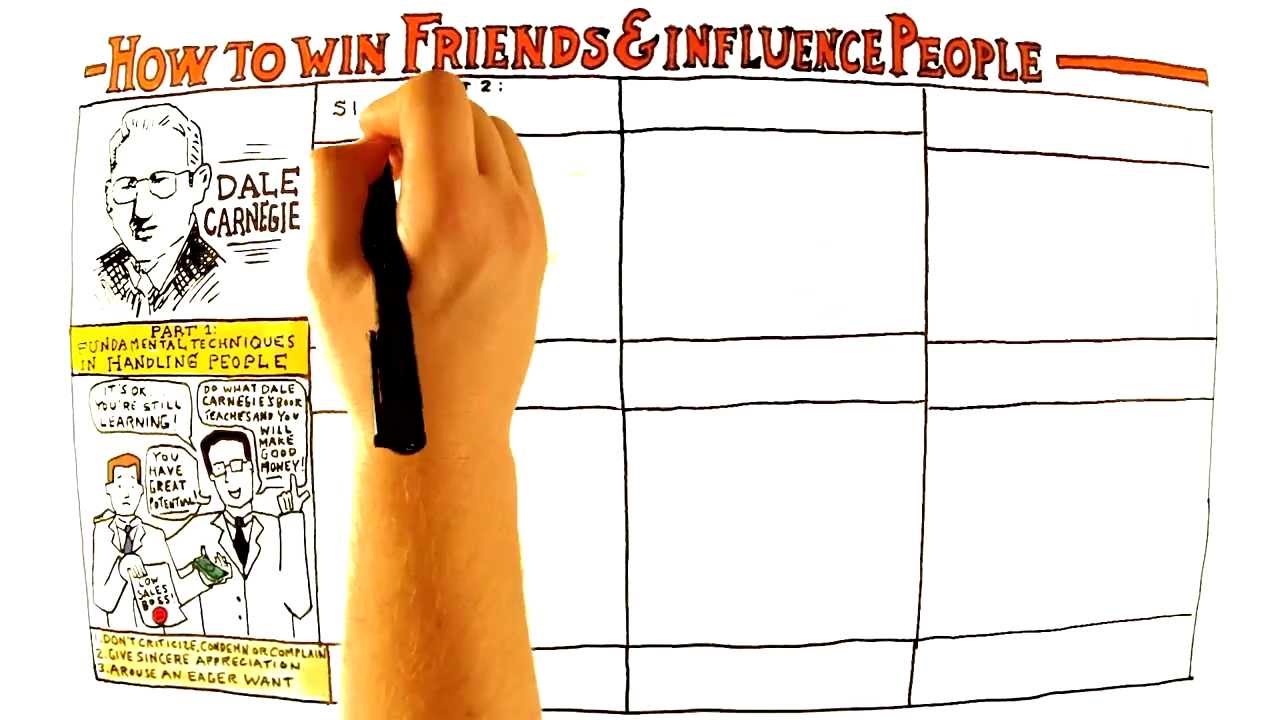
In my last post I talked about factors outside of personal aspects that can alter the chances of success, such as pure coincidence. My next source does pretty much the exact opposite. The novel How to Win Friends and Influence People author, Dale Carnegie presents ideas about ways that a person can alter their personal traits in order to make others like them. He also address social situations and the ability to convince others during them. He does this through the use of various principles.
- Begin with praise and honest appreciation
- Call to attention people’s mistakes indirectly
- Talk about your own mistakes before criticizing the other person
- Ask questions instead of giving direct orders
- Let the other person save face
- Praise the slightest improvement and praise every improvement. Be “hearty in your approbation and lavish in your praise”
- Give the other person a fine reputation to live up to
- Use encouragement. Make every fault seem easy to correct
- Make the other person happy about doing the thing you suggest
I think that these are very applicable to day to day actions but I would have to say that between Outliers and How to Win Friends and Influence People, I think that the factors determining the overall well-being of a person are more affected by surrounding events.
In my next and final blog post I’ll be concluding all of my research as a whole of factors of success and the importance it can have.
How to Invest Properly
Investing Horror Story
 |
| Losing all your money |
With the high potential rewards of investing. there also comes a great deal of risk. The article, “Investing disasters - when bad investments go even more bad!,” highlights the investing horror story of one novice investor.
John was a member of an up-and-coming start up company in Palo Alto in 1999. Since the company was quickly rising and his capital was increasing, he decided to invest some of the money that he had put away to use on the down payment of a house. When he set out to invest his money, he knew very little about how to invest prosperously. His first mistake, not diversifying his investments. He put all of his investments into 3 small company’s stocks which is the equivalent of a cardinal sin in investing. This was the first mistake that led to a downhill spiral of John’s capital.
From the minute he started investing, the stocks had already started their downward bubbles. Over the next couple of weeks, John’s stocks had decreased 25 percent. However, the bigger issue is that he bought these stocks on margin, or borrowed money to buy the large shares. This was his next big mistake. So now, not only has his stocks dropped 25%, but he lost 50% of his capital because of all the money that he now owed because of what he bought on margin.
Instead of cutting his losses here, John fell in love with his stocks, another costly error on his part. As expected, his stocks continued to plummet until they fell about 90%. At that point he had reached a point called the “Margin Call.” A point where he had to pay back the money that he borrowed because he owed so much. His problem: he didn’t have any more cash. He was forced to liquidate all of his investments and turn it back into cash, just so that he could pay back what he owed. He eventually lost just about every dollar that he initially invested, money that was supposed to be used to put a down payment on his first house.
As shown by John’s story, it is very easy to get caught up in investing and live a horror story similar to his. This is why it is extremely important to know what you are doing before investing. If one wants to invest prosperously, they must learn from the mistakes of other novice investors by having a game plan before investing.
The Degree is Worth the Debt

After reading the Atlantic article, "even-with-debt-college-still-pays-off" I agree that the benefits of getting a degree
at college outweigh the burden of debt.
First you have to
understand why college tuition has increased so rapidly. According to the College Board,
tuition and fees at public universities have increased 130 percent over that
last two decades. Many say
this has been attributed from some of these factors, such as, inflation of
Professors’ Salaries, Construction on campus, student amenities and
accommodations, state funding cuts and technological changes. Some
argue that the main cause of tuition growth in state school has been a effect
of huge state funding cuts. States
have to prioritize mandatory spending before spending on education, which falls
under “discriminatory” part of the budget.
Is the degree worth the debt? Yes it is, college graduates on average have higher employment
rates, larger salaries, and better interpersonal skills than someone with just
a high school diploma. The demand for quality college education has
increased; the modern job market puts a lot of emphasis on degrees. People
who attend college have a far better chance at finding a job and being
“successful” in life.

The earnings a person receives with a bachelor's degree still trump the
student debt in most cases. “When you add up the premium that college grads
benefit from, which can amount to upwards of $10,000 each year, and multiply it
by a career that lasts for about 45 years, the cost of a college education is
well worth it.”
It is good to keep in mind whether
the student is going to utilized their experience and make a worth while return
on his or her education. There
are some students that would end up wealthier if they learned a trade or
pursued a technical degree from a community college.
For the most part if a student plans on taking advantage of higher education to find a vocation then the debt of college is worth it.
For the most part if a student plans on taking advantage of higher education to find a vocation then the debt of college is worth it.
Subscribe to:
Posts (Atom)