Showing posts with label Gurevicius. Show all posts

Thursday, November 12, 2015

Disadvantages and Advantages of Competitive Sports

http://photos.demandstudios.com

I wanted to research how highly competitive sports affect athletes’ well being because I am a competitive athlete myself. I have noticed certain benefits and disadvantages of being a competitive athlete and wanted to research other advantages and disadvantages. The future well being of an athlete interested me because most people are athletes when they are children and teens, but when they become adults many of them don’t continue their sport. I was very curious if playing a sport led to a more successful and happier life as an adult.
I found that any sort of exercise can help an individual succeed and become physically and mentally stronger. These strengths lead to a happier and less stressful life which is the ultimate goal for most people. Competitive sports teach athletes to cope with stress, help them gain confidence, and make new friends. A more social life can lead to more connections later in life and good social skills. However, I did find some disadvantages of playing competitive sports. Some athletes experience extreme levels of pressure due to coaches, other athletes, parents, and spectators pushing them and judging them. I also found that kids with very forceful parents tend to experience lots of stress. I have experienced the same causes of stress but I have learned to deal with it and move on. There are pros and cons to playing a sport, but in the end I think that being a competitive athlete benefits individuals more than it hurts them.  

Student Athletes Succeed in the Classroom

http://www.phillysportstc.com/
As a student athlete, I have never experienced a major drop in my academic success. I have learned to manage my time playing competitive tennis, completing school work, and leisure time in order to live a happy and less stressful life. For the most part, my teammates and tennis friends have received good grades in school. Competitive sports help students be more successful with school work.
Sam Snead, a professional golfer, talks about how studies show that students that play sports are more successful than students that don’t in his article “Playing Sport Leads to Improved Academic Performance.” “Research has shown that physical movement can affect the brain’s physiology by increasing cerebral capillary growth, blood flow, oxygenation, production of neurotrophins, growth of nerve cells in the hippocampus, neurotransmitter levels, development of nerve connections, density of neural network, and brain tissue volume” (Snead). Physical movement has shown positive results in the way our brain function leading to an advantage in the classroom. Competitive athletes become more engaged in class, more understanding, better at storing and retrieving information, and better with coping with stress. Active students are more likely to do better in school because of these benefits. “Participation in sport also has been associated with completing more years of education and consistently higher grades in school” (Snead). It has also been proven that student athletes go to school more and receive higher grades due to their brain benefits as well as time management skills. Overall, student athletes get many benefits from their physical activity which is apparent in the classroom. Statistics also show that they are more likely to become successful in school.
In the future I plan on researching the mental consequences of playing a competitive sport.


Friday, November 6, 2015

Don't Force the Next Michael Jordan

media.licdn.com

My childhood was always involved with sports and  exercise. Whether this was playing basketball at a friend’s house, playing soccer or football at recess, or taking tennis lessons. I found intense sports to be very fun so I was naturally inclined to playing many sports competitively. I played soccer for a few years and I was quite good, but my family and Lithuanian family friend group played tennis. My surroundings motivated me to play tennis and I seemed to like it just as much as soccer. My parents began pushing me to play more tournaments and I soon became very stressed. I found tournaments to be very stressful at first but as I won more matches, I gained more confidence. 12 years later I still enjoy the sport of tennis as well as the competitive aspect. A MSNBC contributor named Jacqueline Stenson interviewed a few doctors in order to research the affects parents have on their athletes in her article “Pushing too hard too young” . I think that some parents push their children too hard and their children tend to lose the fun they had when playing a sport. Competitive sports become more stressful than they already are to children that have parents that push them too hard.

What some parents don’t understand is that their kids must become the next Michael Jordan or Roger Federer on their own. This means that children must develop the passion for the sport and the motivation to improve without their parents forcing or pushing them to do so. “Parents who live vicariously through their children can be problematic” (Stenson). It’s good for children to dream of participating in the Olympics, but parents that force their kids into playing a sport can cause their children to lose interest. Parents need to stop pushing their children into playing a sport they hate and encourage them to play a sport they like. “Parents -- and coaches -- who push too hard too young, particularly when they emphasize winning above all else, can easily wipe out a child’s motivation to play, says Dr. Henry Goitz, chief of sports medicine at the Medical College of Ohio in Toledo” (Stenson). I have had coaches that have only thought about winning and never about my satisfaction. These coaches become my least favorite very quickly because they made tennis seem as though it was only meant to be played to win. This can happen to many kids and lead to kids quitting a sport. Sports provide healthy lifestyles, ways to cope with stress, entertainment, and ways to make friends and bond with others. Parents and coaches, don’t push kids to lose these benefits.

I plan on researching in the future how competitive sports can negatively affect the everyday well-being of someone.

Friday, October 9, 2015

Sports and The Mindset to Success


http://www.funonline.in
As you may know, I am a tennis player and as a competitive sports athlete I have a mentality that helps me through life and tennis. Tennis helps me organize my thoughts, goals, and emotions. Playing a competitive sports teaches athletes how to maintain control over different situations, whether these situations are seen in everyday life or sports specifically. Competitive sports athletes acquire the mentality to succeed in their sports as well as life.
Athletes may learn the determination and focus to achieve personal goals. Goals must be set in order  to feel accomplished. All people set goals on an everyday basis, whether these people are athletes, students, doctors, or cashiers. Success is gained by achieving these goals and moving on to next goal. According to Kirk Mango, a physical educator, former coach, and author, states in his article called “Sports: The Benefits of Competitive Sports Participation In Today’s Sports Climate” that athletes develop the mindset to success by “[developing] good time management skills, [creating] strategies for improving their skill set, [building] a strong sense of focus and concentration, [developing] internal skills for handling pressure, [learning] how to take calculated risks, and when not to, and [taking] responsibility for ones success or failure” (Mango) Athletes learn how to develop all the mental skills to succeed in their actions and goals. They use these skills in order to improve their performance and end up with skills that can help them for the rest for the rest of their lives.
I have noticed these improvements in my school work, productivity, mentality, and tennis. I have realized the importance of a solid mindset from tennis. Competitive tennis requires an extreme amount of focus, emotional control, and determination. Once mental slip during a match and all of a sudden you can be losing. It is important to stay focused on the goals in tennis as well as life. Achieving goals is what make us success people.

I plan to research about how competitive sports affect the physical everyday well-being of athletes.

Thursday, September 24, 2015

The Benefits of Anxiety


http://blog.drstankovich.com/
As a tennis player, I used to show my emotion on the court but as time progressed I noticed the importance of controlling emotions and feelings. Competitive sports require athletes to experience high levels of stress and anxiety in order to gain results and achieve goals. Stress and anxiety is not a good feeling and competitive athletes experience this all the time, not just from school and responsibilities but from the sport they play.  Some people think that these high levels of stress can lead to negative effects on the well being of an individual, however, I think the opposite. I think high levels of stress can lead to better performance in sports and everyday activities.
Competitive sports help athletes take pride and feel confident about their actions. They go through lots of anxiety but learn to cope with it and move on with it. Mohammad Ali Besharat conducted a study on 246 Iranian athletes to determine the relationship between sports anxiety and performance and wrote an article called Moderating Effects of Self-Confidence and Sport Self-Efficacy on the Relationship between Competitive Anxiety and Sport Performance”, which was found on the database Gale Resources in Context. According to Besharat,  “sport self-efficacy prepares athlete for active encountering with competitive anxiety through reinforc-ing efficient coping strategies.” With coping strategies athletes learn how to cope with their emotions and continue on with their life with confidence. Athletes become more confident in their decisions on an everyday basis. “Self-confidence as one of the most important variables re-lated to sport performance (Robazza & Bortoli, 2007) increases perceived ability to emotion management and provides possi-bility for athlete to control negative emotions more effectively” (Besharat). Athletes that experience high pressure may be more confident in everyday life and may also be able to deal with negativity efficiently. Athletes learn how to control their emotions and think positively in order to perform at their peak. If these athletes were to use these strategies in everyday life they might feel happier and more relaxed. Because sports cause extreme levels of stress, athletes might feel as though the stressful encounters they experience everyday are easier to cope with and control.

Future Question: Does sports anxiety have any good effects on the health and decision making of an athlete?

Friday, September 18, 2015

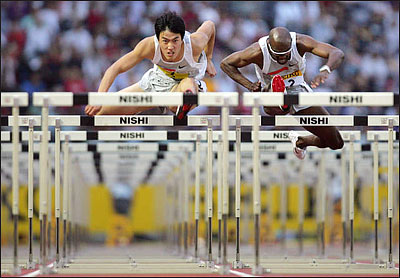
Life is a Competitive Sport


http://images.china.cn/

  • Briefly explain why you are interested in studying your topic:  
    • I play a competitive sport that requires control of emotions, stress, and mentality. I am interested to research if there are any studies that have been made to determine if the high levels of stress and anxiety from competitive sports affects the well being.
  • The overall question I plan on answering by the end of the project:
    • How do high-stress, competitive sports affect people’s everyday well-being?
  • Sub questions I will need to answer in order to answer the overall question:
    • Do high stress situations positively affect the well being of a person in the future?
    • How does self confidence affect the well being of a person?
    • Do strategies for coping with sport anxiety help in everyday life? How?
    • Do mental strategies used while playing sports help athletes live a happy and stress free life?
  • My plan of research (what specific Library Databases, specific websites, names of authors, people, etc. will I pursue to find the answers to the questions above):
    • ProQuest
    • Gale Virtual Reference Library
    • Studies Performed on Athletes
    • Doctor reports